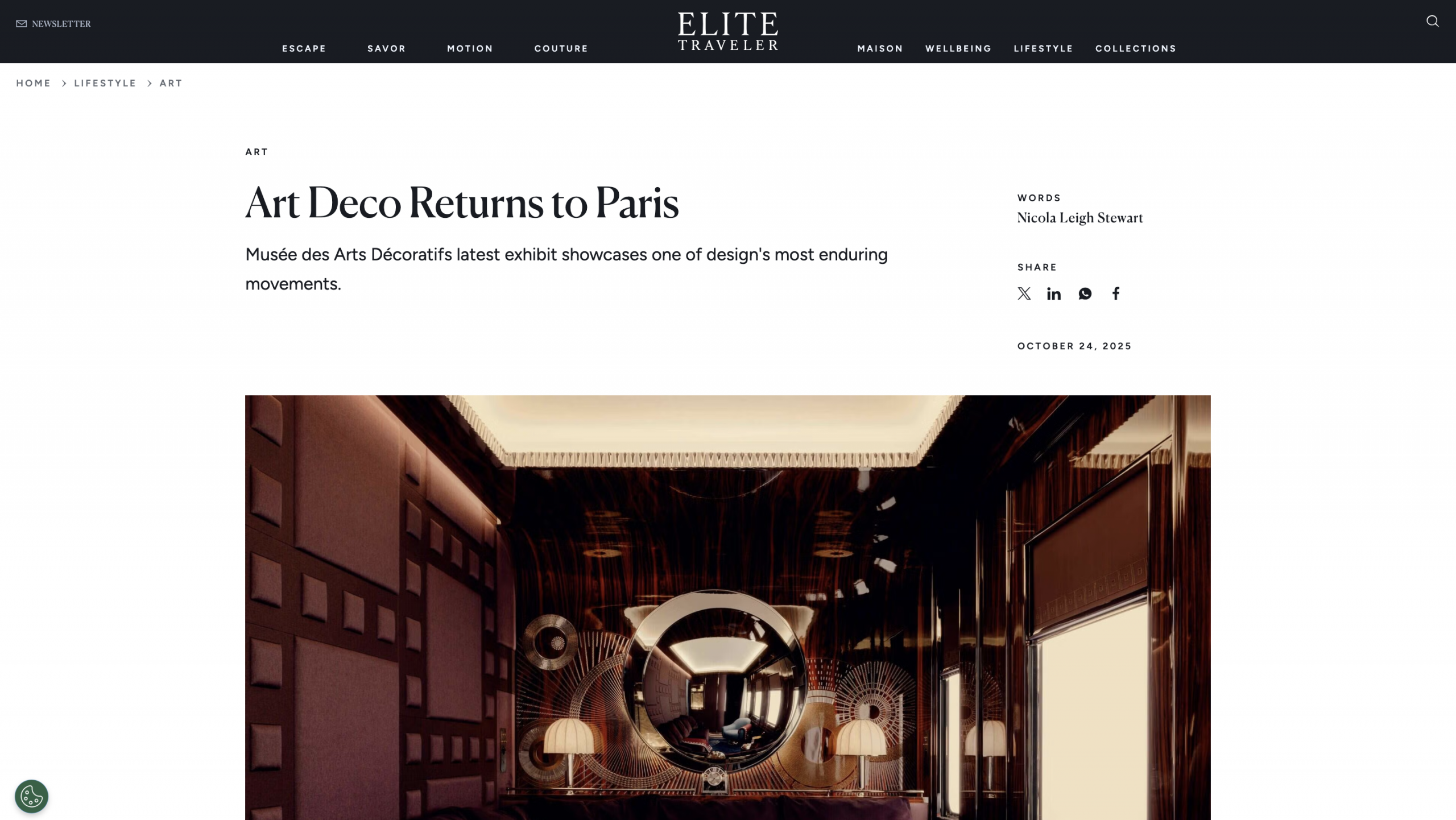
The birth of Art Deco didn’t just mark a new design movement. In many ways it marled a new way of life. Although designers had been developing the style since the 1910s as a refined transition from the elaborate Art Nouveau, it was the 1925 Exposition internationale des arts décoratifs et industriels modernes in Paris which marked the beginnings of Art Deco as we know it, and which gave the movement its name.
Post-WWI until the Great Depression in 1929 was a period of fun and modernity after the horrors of the first world war and while the 1930s saw a more refined aesthetic from the previous decade’s exuberance, Art Deco was here to stay, with its themes of novelty, travel, speed and freedom.
A new exhibition at Paris’ Musée des Arts Décoratifs celebrates the movement’s centenary, while showcasing its continued relevance today. Spread across three floors, the more than 1,000 pieces on show span from the elaborate – think embroidered silk evening dresses by Madeleine Vionnet and Frantz Jouradin and glass and silver creations by René Lalique – to the everyday, such as cups and saucers, coffee pots, ad even a toaster, a result of departments stores putting the Art Deco style into mass production.
This volume and variety of items show the richness of Art Deco – its design codes could be applied to nearly every area of life – although prices of even the smallest objects remained high. Despite the carefree, good time image of the Roaring Twenties, or Les Années folles in French, the reality is that post-war life was hard for many. Art Deco product were often luxury products, crafted using sophisticated techniques from fine materials such as precious woods, ivory, leather and porcelain, which in part explains their timeless style.