The birth of Art Deco didn’t just mark a new design movement. In many ways it marked a new way of life. Although designers had been developing the style since the 1910s as a refined transition from the elaborate Art Nouveau, it was the 1925 Exposition internationale des arts décoratifs et industriels modernes in Paris which marked the beginnings of Art Deco as we know it, and which gave the movement its name.
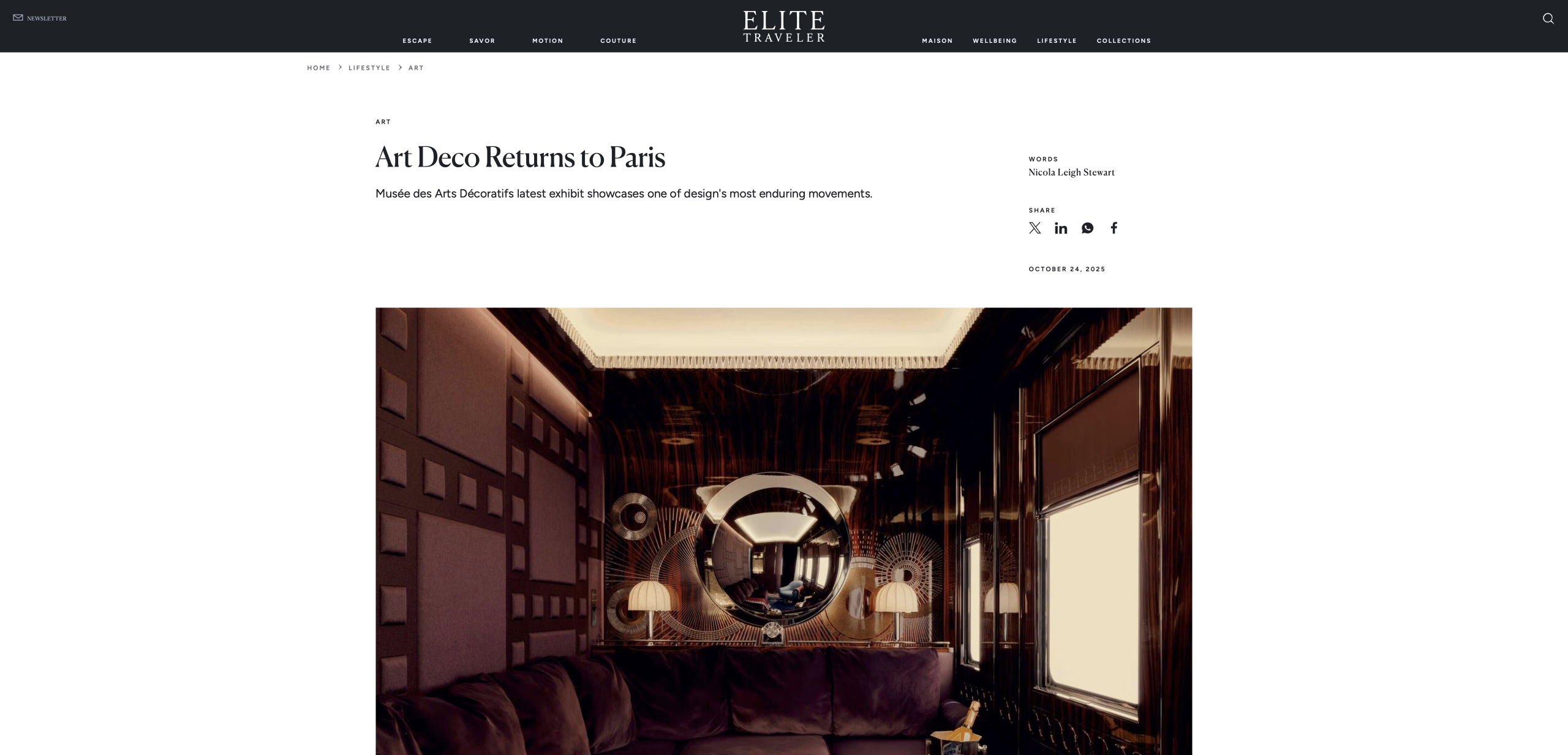
Downstairs in the museum’s nave all focus is on another type of travel the highlight is an exclusive look at Orient Express’ future train, imagined by artistic director Maxime d’Angeac and due to launch in 2027. To connect the past, present and future, a 1926 cabin from the museum’s collection is displayed with full-size models of d’Agneac’s vision of Art Deco today.
Individual design elements are also presented side by side with archive pieces, such as the painstakingly hand-embroidered wood panelling that replaces the glass and wood marquetry panels of the 1920s and ‘30s trains, and the rail motif pattern created by Suzanne Lalique-Haviland for the carpets and upholstery which has now been reimagined in a larger scale as textile bedroom partitions. The idea is not only to link together the 100 years of Art Deco design, but also show off the movement’s enduring appeal. Some movements define a moment in time but Art Deco has inspired a century – and counting.