Residents of the French port town of Saint-Nazaire are used to the sight of strange new beasts of the sea chugging into the Loire estuary. For more than 170 years, the Chantiers de l’Atlantique shipyard, which sits 30 miles downriver of the city of Nantes, has built warships, oil tankers and grand ocean liners.
In recent years, some of the world’s largest cruise ships have blocked the sun above the yard with their 20 decks, waterslides and cabins for 5,000 passengers or more. But when I visit in early April, all eyes are ont he very different vessel now nearing completion in the mile-long Bassin de Penhoët.
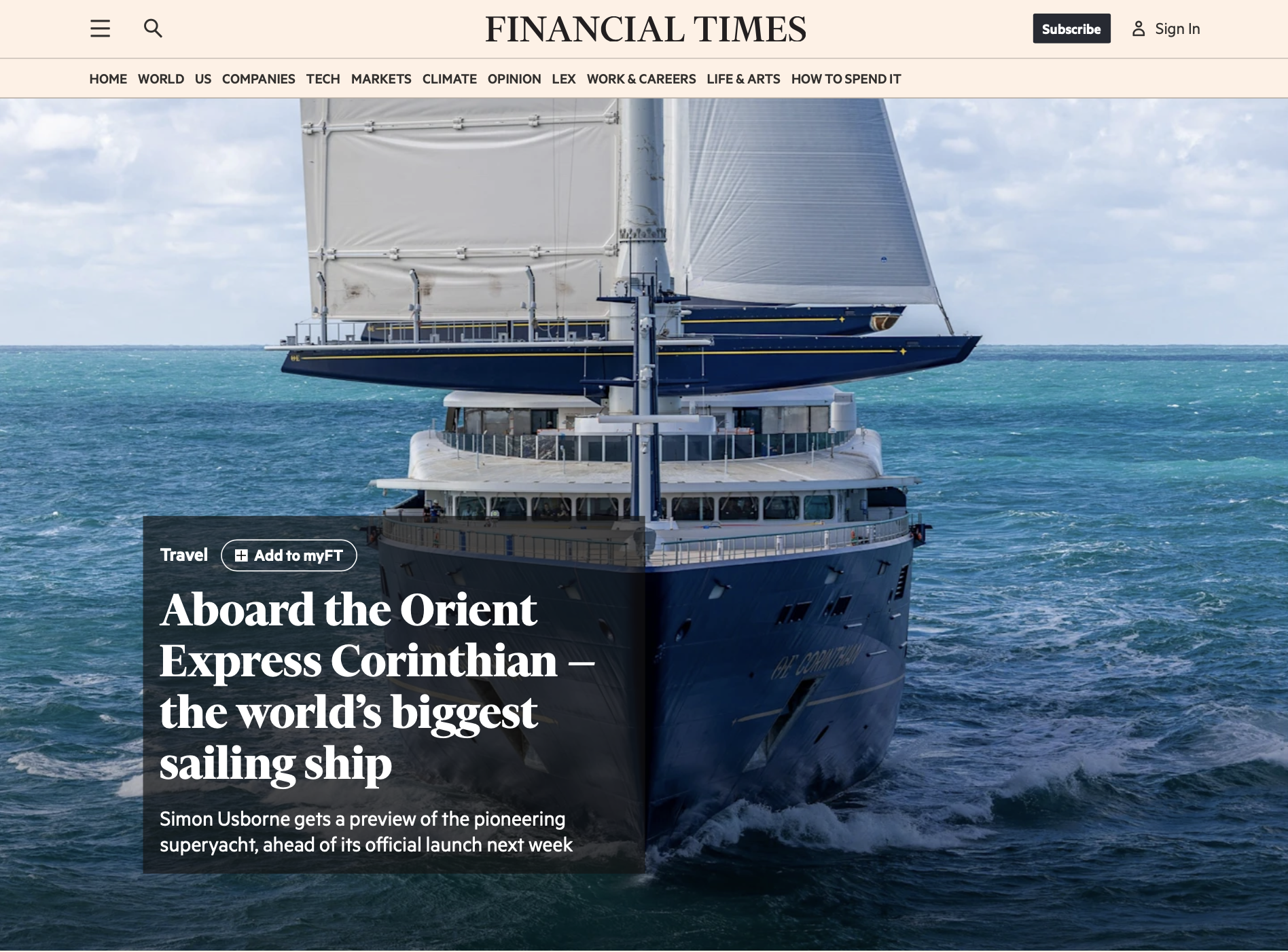
I’m the first journalist to step aboard the Orient Express Corinthian, the world’s largest and, arguably, most unusual sailing yacht. At 220 metres long, it looks like the love child of a sheikh’s superyacht, a cruise liner and child’s drawing of a sailboat, its three carbon-fibre masts rising more than 100 metres above the waterline.
The yacht’s rigid sails, which fold like papers fans on top boom-like balestrons when not in use, are expected to cut fuel consumption by 40 per cent (though it can run under wind power alone, there’s also a massive engine room below deck). Passengers should not, however, expect to see any savings reflected in their bills; the Corinthian is sailing into a nautical arms race involving some of the biggest names in luxury hospitality.
The ship, which has 54 cabins with a capacity of 110 guests (the crew will number 170), is the first vessel in a fleet being launched by Orient Express, a name steeped in rail rather than maritime history. In 2022, Accor, the French hotel group, completed the purchase of the brand from France’s national rail company SNCF, almost 145 years after the first Orient Express service rolled east out of Paris.
In 2024, the luxury goods conglomerate LVMH partnered with Accor to accelerate not only the revival of OE trains but also new hotels and yachts, which will eventually appear on linked itineraries. In a meeting of grand French corporate powers, OE Sailing Yachts appointed the Saint-Nazaire shipyard to build the first two vessels, incorporating the new rigid sail system the yard had already patented.
Ahead of the official launch on May 2, I’m taking a tour with Maxime d’Angeac, a Paris-based architect and designer. He has been tasked with translating OE’s art deco heritage, much of which is based on mythology that has built up like layers of lacquer since the interwar golden age of travel.